
RAINWATER HARVESTING
Capture Rain. Store Water. Make Every Drop Count.
Rainwater harvesting turns rainfall into a useful water resource. Collect water from a roof, store it in a rainwater tank or cistern, and use it for irrigation, landscape care and other appropriate applications.
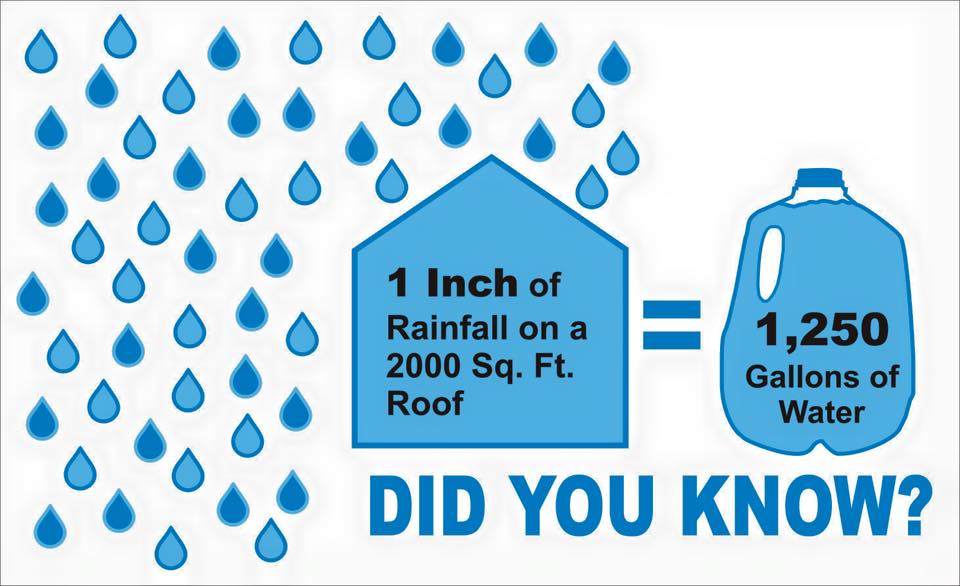
Why Let Good Water Run Away?
Rainwater harvesting has been practiced for centuries. Today, rainwater collection systems offer a practical way to capture rainfall that lands on a suitable collection surface and store it for future use.
Systems can range from a straightforward rainwater storage tank to a more complete arrangement incorporating conveyance, filtration, pumping and water distribution equipment.

From the Roof to the Tank.
Rainfall lands on a suitable collection surface, commonly a roof.
Gutters and conveyance piping move collected rainwater toward storage.
A rainwater tank or cistern holds the captured water until it is needed.
Stored rainwater can then be supplied to appropriate end uses.
Rainwater Storage for When You Need It.
Rain does not always arrive when water demand is highest. A rainwater storage tank or cistern allows collected rainfall to be held between rain events and used when conditions call for additional water.
Storage capacity can be planned around roof collection area, available space, rainfall, intended use and the amount of reserve water desired.

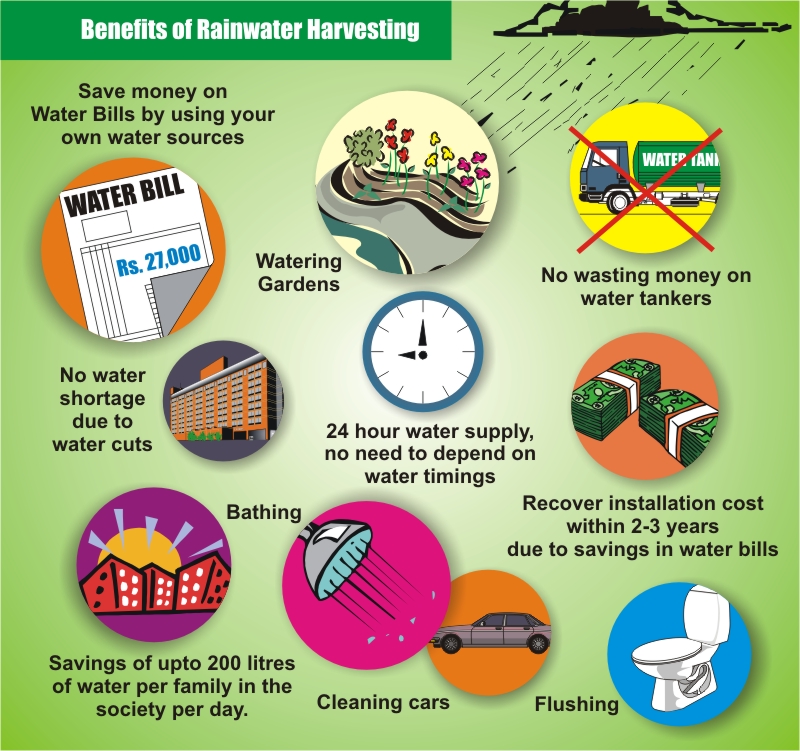
More Than Water Storage.
Rainwater harvesting creates an additional source of stored water while capturing a portion of stormwater runoff from the collection surface.
SUPPLEMENTAL WATER — Store rainfall for appropriate uses between rain events.
LANDSCAPE IRRIGATION — Use collected rainwater for lawns, gardens and landscape areas.
RUNOFF CAPTURE — Retain a portion of the rainfall collected from the roof or other suitable surface.
SYSTEM FLEXIBILITY — Build around the storage capacity and water applications that fit the property.
Uses for Harvested Rainwater
Depending on system design, water quality, treatment and applicable requirements, harvested rainwater can support a variety of uses.
Build Around the Property.
Rainwater harvesting systems can be configured around available collection area, tank location, storage requirements and intended use.

Using Harvested Rainwater Indoors
Rainwater intended for drinking or other potable applications requires appropriate collection, treatment and system design. Follow applicable health, plumbing and water-quality requirements and select treatment equipment based on the intended use and water conditions.
Explore Rainwater Collection Options
Learn more about rainwater collection, storage and harvesting systems in our Rain Harvesting Brochure.
VIEW RAIN HARVESTING BROCHURERainwater Harvesting Systems & Supplies
All-Tex Irrigation & Supply provides rainwater harvesting supplies, rainwater collection systems, rainwater storage tanks, cistern components, pumps, filtration, piping and water distribution equipment for residential, agricultural and commercial applications. Explore rainwater harvesting and water storage solutions in San Angelo, Abilene and Wichita Falls, Texas.
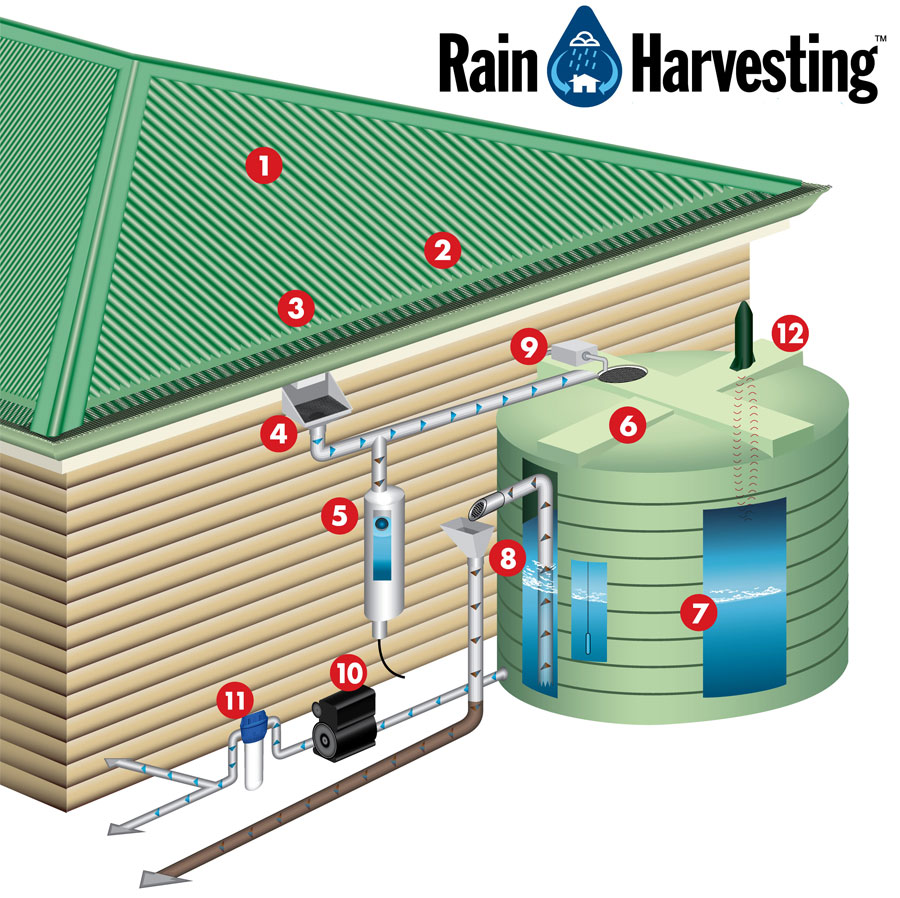
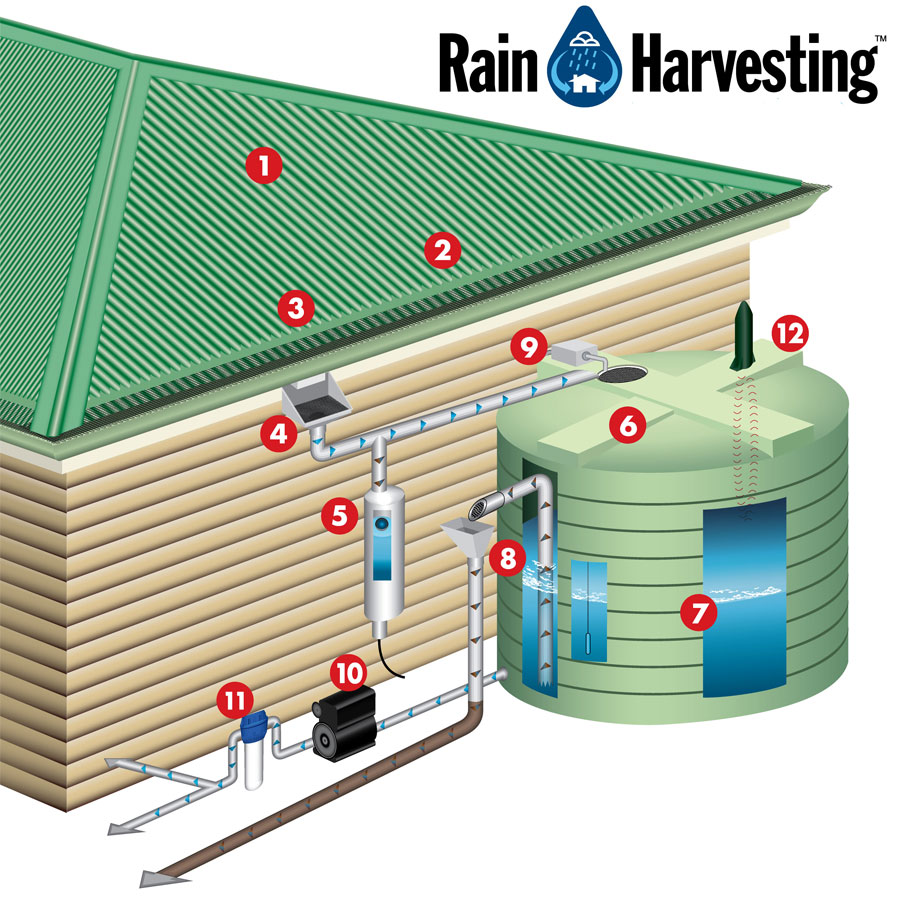
Follow these simple steps.
1. Check ROOF SURFACE is suitable for collecting quality rainwater.
2. Install GUTTER MESH (such as Blue Mountain Mesh®) to prevent leaves and debris from blocking gutters.
3. Fit GUTTER OUTLETS from the underside of the gutter to prevent obstruction of water flow.
4. Fit Leaf Eater® or Leaf Beater® RAIN HEADS to downpipes to prevent blocking. Rain heads deflect leaves and debris and keep mosquitoes out of pipes that hold water (‘wet’ systems).
5. Install FIRST FLUSH DIVERTER/S to help prevent the most contaminated rainwater from entering the tank.
6. Ensure a TANK SCREEN is installed at tank entry point to keep mosquitoes and pests out.
7. Choose a WATER TANK. Consider annual rainfall, roof catchment area and water usage when determining its size.
8. Attach INSECT PROOF SCREENS or FLAP VALVES to the end of all pipes to the tank screen to keep mosquitoes and pests out and ensure the tank is vented properly. Install an AIR GAP to TANK OVERFLOW OUTLETS to prevent stormwater backflow into your tank.
9. Utilize a TANK TOP UP system (if required) to automatically top up the tank with mains water when levels fall to a designated minimum level.
10. Select a PUMP SYSTEM (if required) to distribute water for use inside or outside the home.
11. RAINWATER FILTER. Fit a purpose designed rainwater filter after the pump to help reduce residual sediment, color and odor.
12. WATER LEVEL INDICATOR. Install a Tank Gauge water level indicator to your rainwater tank to monitor your water level and usage.